
Payment Gateway
Payment gateway and authorisation switch
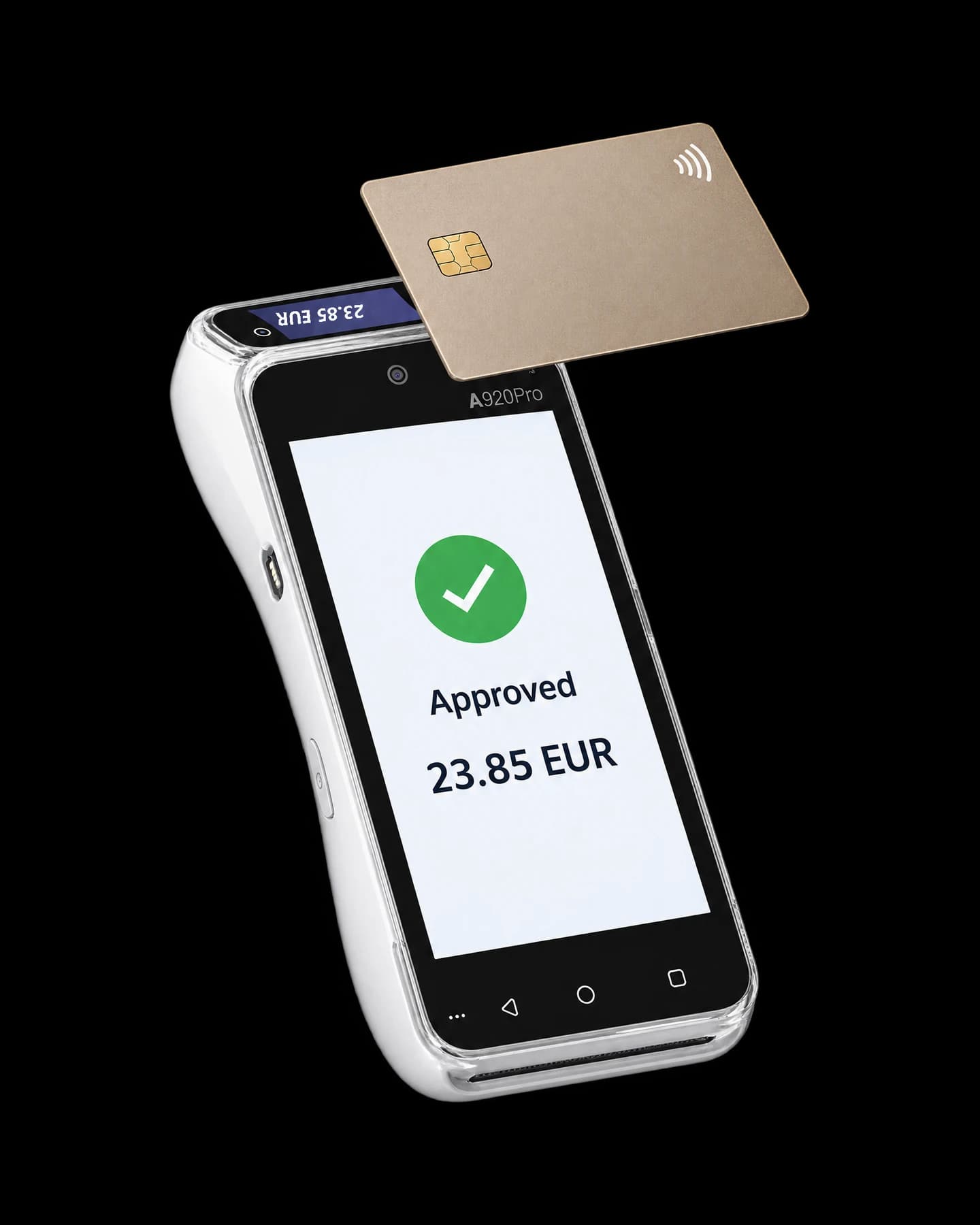
The core of the Switchio platform acts as a unified gateway and switch. It securely ingests transaction data from all network endpoints, translates messaging protocols on the fly, and dynamically routes each transaction to the optimal acquirer or processing center.
How it works
One switch, every terminal in the network.
Whether transactions originate from attended counters, unattended kiosks, or Android smartphones, the switch processes them identically. It evaluates your routing rules, selects the right processor, adapts protocol messages, and logs every event so your terminal fleet behaves uniformly everywhere.
Extensive Ecosystem Connectivity
Already connected, from acquirers to meal voucher cards.
The switch interfaces seamlessly with acquirers across Europe and the Americas, international and domestic schemes, processing centers, digital wallets, fleet and meal voucher cards, and value-added services. Enabling an existing provider is purely a configuration step. No new integration required.
Acquirers
EU cross-border, international and regional acquirers behind one integration.
EU cross-border
- Elavon
- Fiserv EU
- Payabl.
- Raiffeisen Bank International
- Rapyd
- Shift4
- Worldline
- Worldline Nordic (Bambora)
International
- ANZ Worldline
- BancoEstado
- Credicorp
- Elavon
- Fiserv
- Klap
- Neonet
- VisaNet
- Worldpay
Regional
- Card complete Service Bank
- Československá obchodní banka
- Comgate
- DSK Bank
- Global Payments
- K&H
- NLB
- OTP
- Payone
- Paynopain
- Polskie ePłatności
- Postbank
- SK Pay
- Tatra banka
- UniCredit Bank
- Ukrgasbank
- Všeobecná úverová banka
- Worldline Czech Republic (KB SmartPay)
- Worldline
Transit ready
- Elavon
- Rapyd
- Shift4
- BancoEstado
- Credicorp
- Fiserv
- Klap
- Neonet
- VisaNet
- Worldpay
- Československá obchodní banka
- K&H
- NLB
- Polskie ePłatności
- Tatra banka
- Ukrgasbank
Card schemes
International schemes and the domestic ones that local acquiring depends on.
International
- American Express
- China UnionPay
- Diners & Discover
- JCB
- Mastercard
- Visa
Domestic
- Bancontact via AERA
- BankAxept via Nets
- Dankort via Nets
Processing centres
Global and regional processors the switch hands transactions to.
- Bankart
- Borica
- DanubePay
- Dinit Slovenia
- Electronic Payment Exchange
- FT Tecnologías
- Global Payments Europe
- IT Card
- MC Payment Gateway Services
- Nets A/S
- Nexi Central Europe
- Regional Card Processing Centre
- Silverflow
- SIBS
- Ukrainian Processing Centre
- Visa Acceptance Platform (Cybersource)
Alternative payment methods
Wallets and account to account payments running through the same transaction flow as cards.
- Alipay
- BLIK
- CVAK
- Czech instant payments
- Kverkom
- Mastercard Open BP
- TWINT
- Qvik
- Swish
- Vipps & MobilePay
- WeChat Pay
- Wero
Fleet card issuers
Fuel and fleet cards accepted next to bank cards on the same device.
- AS24
- CCS
- DFC
- DKV
- E100
- Eurooil
- Euroshell
- Eurowag
- LogPay
- Lukoil
- MOL
- OMV
- PKN Orlen
- Trafineo
- UTA
Benefit and meal voucher cards
- Axacard
- FPOHO
- Pluxee
- SZÉP cards
- Up Slovakia
Value-added services
Top-ups, vouchers and tolls sold at the same checkout.
- Paysafecard
- T-Mobile GSM top-up
- O2 GSM top-up
- Vodafone GSM top-up
- COOP Mobile GSM top-up
- FunFon GSM top-up
- T-Mobile (Easy) GSM top-up
- Orange (Prima) GSM top-up
- Telekom GSM top-up
- Yettel GSM top-up
- HU-GO toll payments
Inside the switch
Routing, mapping, pipelines.
Three mechanisms decide what happens to a transaction, and all three are configuration rather than a development project.
- RoutingRules and criteria decide which processor takes the transaction, by card type, amount, merchant or terminal.
- MappingThe switch adjusts transaction parameters so the message matches what the processor expects.
- PipelinesSequential steps check a condition and act on it, so a payment runs through the same chain every time.
- Protocol translationEach acquirer and processing centre speaks its own protocol, and the switch speaks all of them.
- Key shieldingThe switch shields the terminal key management system and translates authorisation messages under PCI P2PE.
- Transaction logsEvery executed transaction is logged for traceability, and the portals show the whole lifecycle.
BUILT TO KEEP RUNNING
When an acquirer goes down, your checkout does not.
- 40+acquirers, local and global
- 30 yearsof MONET+ in payments
Multi-acquirer connections and automated backup routing keep transactions flowing in real time if a primary acquirer experiences downtime.
Advanced features
Switch on what the business needs.
Features run on the same core, so turning one on is a configuration step and the reporting stays in one place.
Revenue
Features that add margin on transactions you already take.
- Dynamic Currency Conversion with Elavon, Shift4 and Worldline engines
- Surcharge management by your own business rules
- Card tokenization with token and PAR for loyalty and subscriptions
- GSM top-up at the point of sale
Continuity and control
Features that keep the fleet running and the risk in check.
- Automatic backup routing when an acquirer is unavailable
- Offline EMV acceptance with configurable risk limits
- Terminal virtualization, several merchants on one device
- Risk management with daily limits per merchant, location or terminal
- Subnetwork setup for ISOs and regional projects
Payment methods
Everything the switch can accept next to cards.
- Account to account payments and wallets, processed natively
- Fleet cards from DKV, Eurowag, UTA, CCS, E100 and others
- Meal vouchers and private cards, including Thales PURE
- Split payments across parties, tips and service fees
- Electronic receipts by email
Availability of a feature depends on the acquirer and the market. Tell us where you operate and we will confirm what is live there.
FAQ
The switch, answered.
What integration teams ask before they connect.
What is a payment switch?
A payment switch takes an authorisation message from a terminal, decides where it should go and forwards it to the acquirer or processing centre in the protocol that side expects. In Switchio this is the Payment Gateway, the core the rest of the platform runs on.
How does the switch handle high volumes?
The authorisation architecture processes thousands of transactions per minute and runs in high availability mode, so a node going down does not stop the fleet.
How are routing rules set up?
Rules are configuration, not development. They can look at the card type, the amount, the merchant or the terminal, and they decide the processor and the parameters of the outgoing message.
How is payment data protected?
The gateway is covered by PCI DSS and uses point to point encryption under PCI P2PE. Every component is assessed against the P2PE requirements, and the switch shields the terminal key management system.
Do we need the rest of the platform?
The switch is the base, so everything else on the platform connects to it. You can start with the terminals and the payment application you already run and add modules later.
Talk to Us
Connect with our team.
Share your current setup with us, and we’ll map out how it looks on one streamlined platform.
Other ways to reach us
Email
info@switchio.comPhone
+420 577 110 411
